Is a Soft Box Good for Taking Photos of My Art?
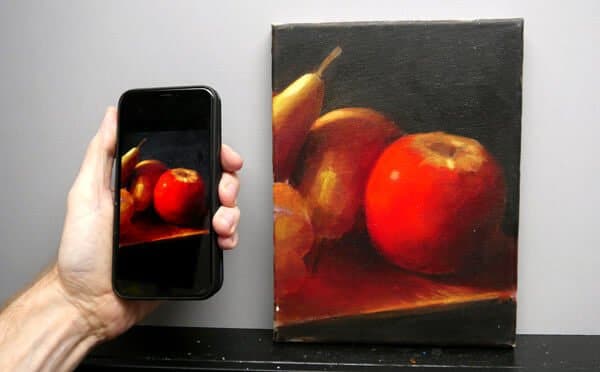
I see a lot of fantastic success stories from the tutorials on the blog and ane of the most common footnotes is,"'my painting looks improve in real life than it does in the photo."
xc% of them are taken on a telephone or iPad and over the last couple of years, I've found smartphone cameras are getting better and ameliorate, as long as yous conduct in heed their sensor size.
A traditional camera has got a much larger sensor, in comparison to a smartphone.
The larger the sensor, the bigger the surface area available to capture light on, so to get the best out of your telephone and become great exposure on your shots, you need to follow a few easy steps.
I've put together a guide beneath which addresses some of the most common bug and the simplest way to set them. At that place are two main approaches, natural light or bogus low-cal, depending on what lighting weather yous have available to accept your photos in.
Photographing with your phone in natural low-cal
Issue #1: The colours don't await accurate

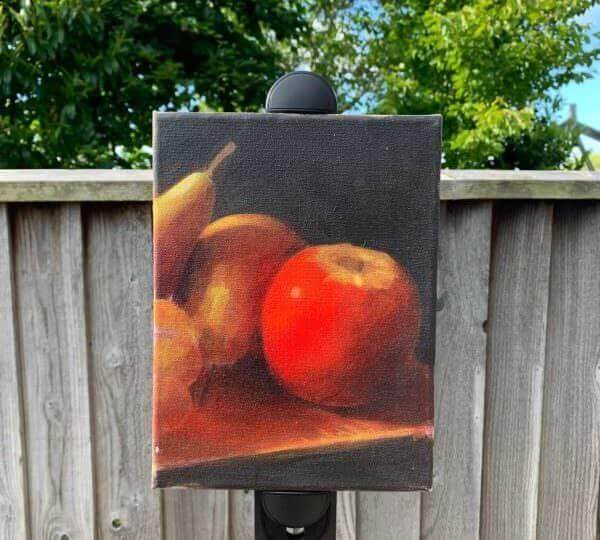
Photo taken indoors with the lights on in comparing to natural daylight
I capeesh how frustrating it tin be to spend all your time on your painting and so when you desire to share your work, the colours look off, or too dark, the image is slightly blurry or distorted.
The about straightforward fix if you've been taking your photographs indoors, is to move towards the light.
Solution: Photo in natural daylight
Taking your painting off the easel away from standard household lamps and placing it in natural daylight will make the biggest deviation to almost every aspect of the photography process but primarily colour accuracy.
Pace-by-step: capture stage
Yous can either hang your sheet on a wall outside, preferably non in the glare of direct sunlight to avoid any reflection and hold your phone level and shoot.
Or lay your canvas on the flooring inside, next to an open door, this will be your low-cal source.
Plow off all the other lights in the room and position your canvas roughly 60 cm away from the bottom of the door frame, stand up directly over it to take your shot.

Placing your painting on the floor by an open door will give you good illumination, even on a rainy day!
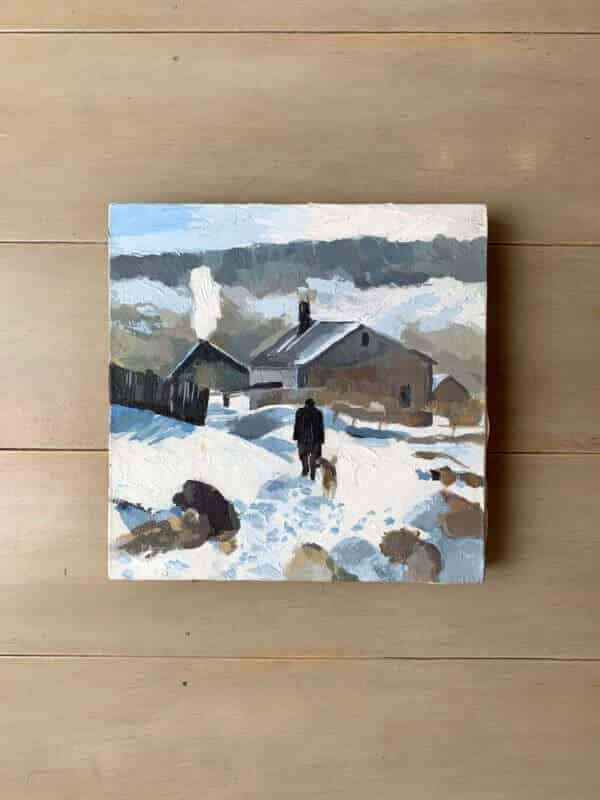
This is my view when I'g standing over the painting and holding the phone direct higher up it
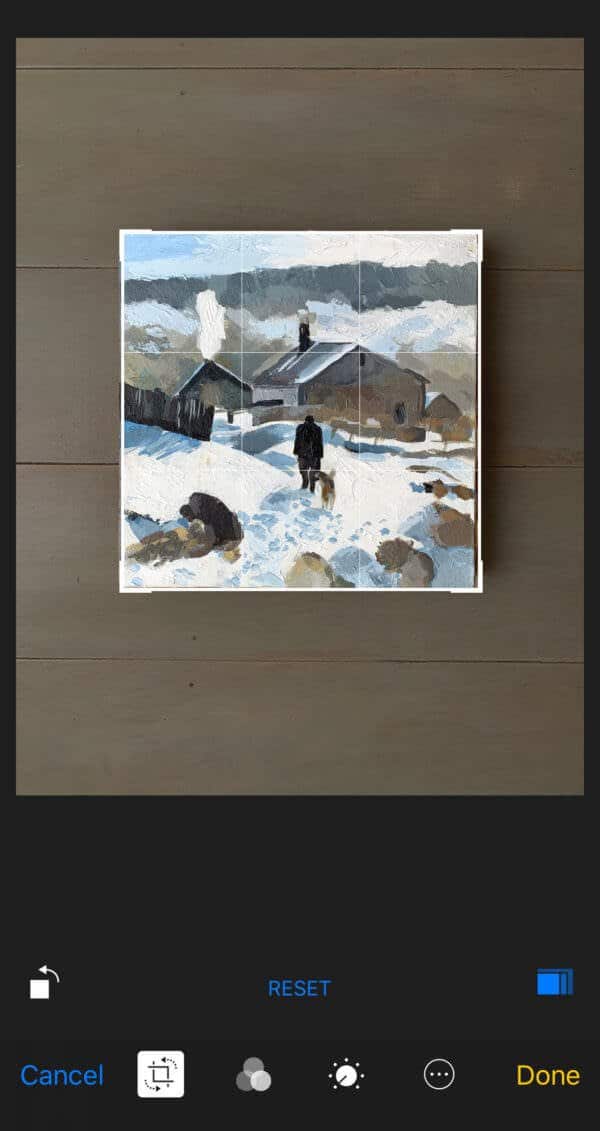
I then ingather the image: (see Issue #4)
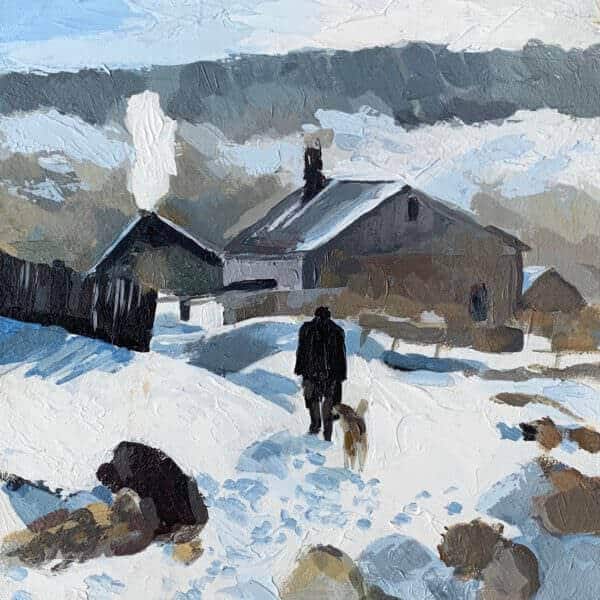
Here is the concluding cropped version of my photograph, observe how the colours wait pretty authentic, the entire painting is evenly lit and you can clearly come across the impasto marks

If you paint with texture and want to evidence depth and castor marks, the side light coming in from the door/window is chosen a raking light and volition enhance the details.

Alternatively, you can place your painting flat on a table adjacent to a window and concord your phone above. The daylight is being diffused by a window bullheaded in this example (yay Ikea!)
Why natural calorie-free?
Colour is created on a surface by specific wavelengths being captivated and others being reflected.
If the lite that is shining on the surface doesn't comprise all of the visible colours (full spectrum) they can't exist reflected, and then your camera won't exist able to tape them.
Daylight is chosen full spectrum lighting because information technology contains all the unlike coloured wavelengths; some bogus lights have missing colours and 'spikes' in the spectrum. Photographing your painting nether depression colour rendering household bulbs indoors, will forestall the camera from capturing all the different colours in your picture.

Colour is caused by the assimilation of certain wavelengths of light by a surface, and the reflection of others. For this to work properly, the light shining on the surface in the get-go place needs to consist of all the visible wavelengths. – Neil Oseman – http://neiloseman.com/tag/cri/
Pro tip: Remember the small sensor in your smartphone camera?
Natural light is and so much brighter in illuminance than your household bulbs it enables the camera to use a fast shutter speed automatically. This means you can handhold your telephone without using a tripod, and there won't exist whatever camera shake or blur.
Issue #2: Distorted perspective
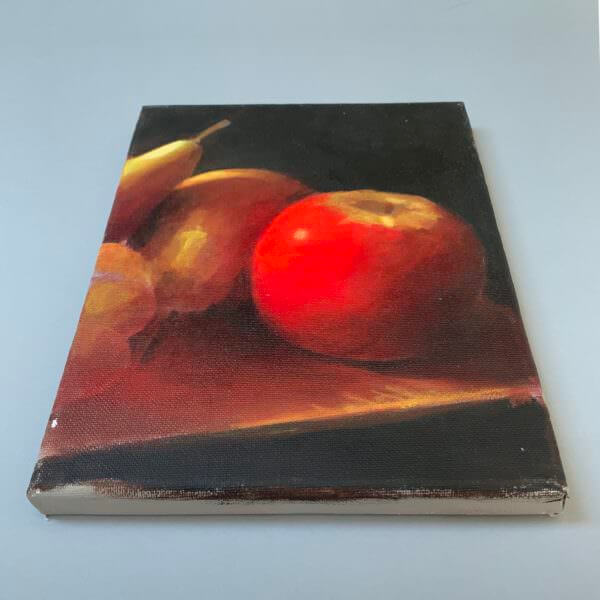
When your painting looks out of perspective, it takes abroad all the difficult work you've put into creating an accurate drawing or painting to start with. Information technology could create an elongated face in a portrait or brusk legs or arms on a figurative piece.
The primal is making sure the bending of your painting and the angle of your phone are the same.

If y'all have 2 angles out, it can misconstrue the edges quite dramatically. In this example, the canvas has been propped against a wall at an angle and so photographed from a unlike angle.
Solution: Adjust your angles
If you've laid your painting on the flooring and yous're shooting down on top of it, there's built-in aid on an iPhone to make sure you're aligned.
Step-past-footstep: capture stage
You have to go into your settings to discover the Grid function and the steps beneath are for an iPhone, (only most smartphones will have a similar function)
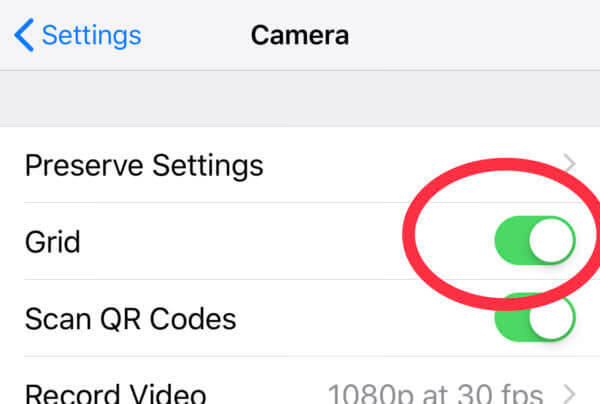
Go to SETTINGS > CAMERA > GRID

So, when you're looking down on an image, 2 crosses will announced in the centre of your telephone display

Motility the phone until just i yellowish cross shows – you're now level – the aforementioned airplane as the flooring
If your canvas is hanging on the wall, endeavour to go along your telephone vertical matching the angle of the canvas.
If you want to go one stage further there are Apps available that testify levels using the phone'south gyroscope, so yous can hold the camera upright knowing you're spot on the level.
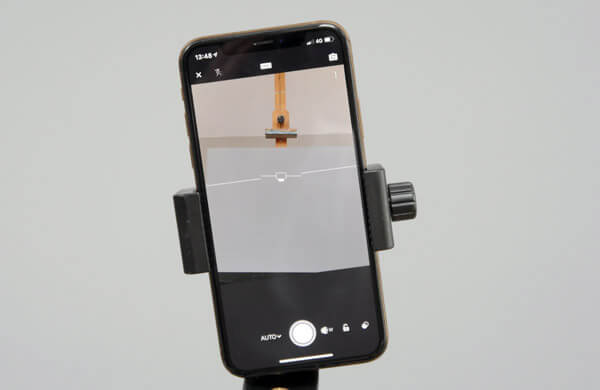
Some third-party apps accept built-in levels (this is from Lightroom mobile)
Why?
Because when you prop your sail at an angle and so concord the photographic camera at a different angle, you go perspective distortion.
Issue #3: Lens & perspective distortion
Have y'all ever noticed the straight, square edges of your canvass look warped? Or a fence mail service you painted vertical has a slight curve to it?
The culprit is distortion. Lines can appear directly at the very centre of the canvas and curve away at the outer edges.
This is a minor issue that is much more apparent when photographing 3D objects but can be evident on smaller canvases. It can pull the viewer's attention to the centre of the piece, which may not be your focal point.
Solution: Check your distance
The result varies in severity depending on your altitude from your canvas.
Step-by-stride: capture phase
If you concord your camera further back than you lot think from your painting, information technology will help to reduce the optical lens distortion.
Why?
An iPhone, for example, has a broad bending lens, so the closer something is to the lens, the larger it appears. When you're belongings the phone too close to a pocket-size canvas surface, the lens will brand the edges of your sail look curved and the centre of the frame larger.
Most photo editing software has a function that automatically fixes barrel distortion.
Pro tip: If yous're posing in a group and want a flattering shot, make sure y'all don't stand in the centre in the front row!
Effect #4: Cluttered surroundings
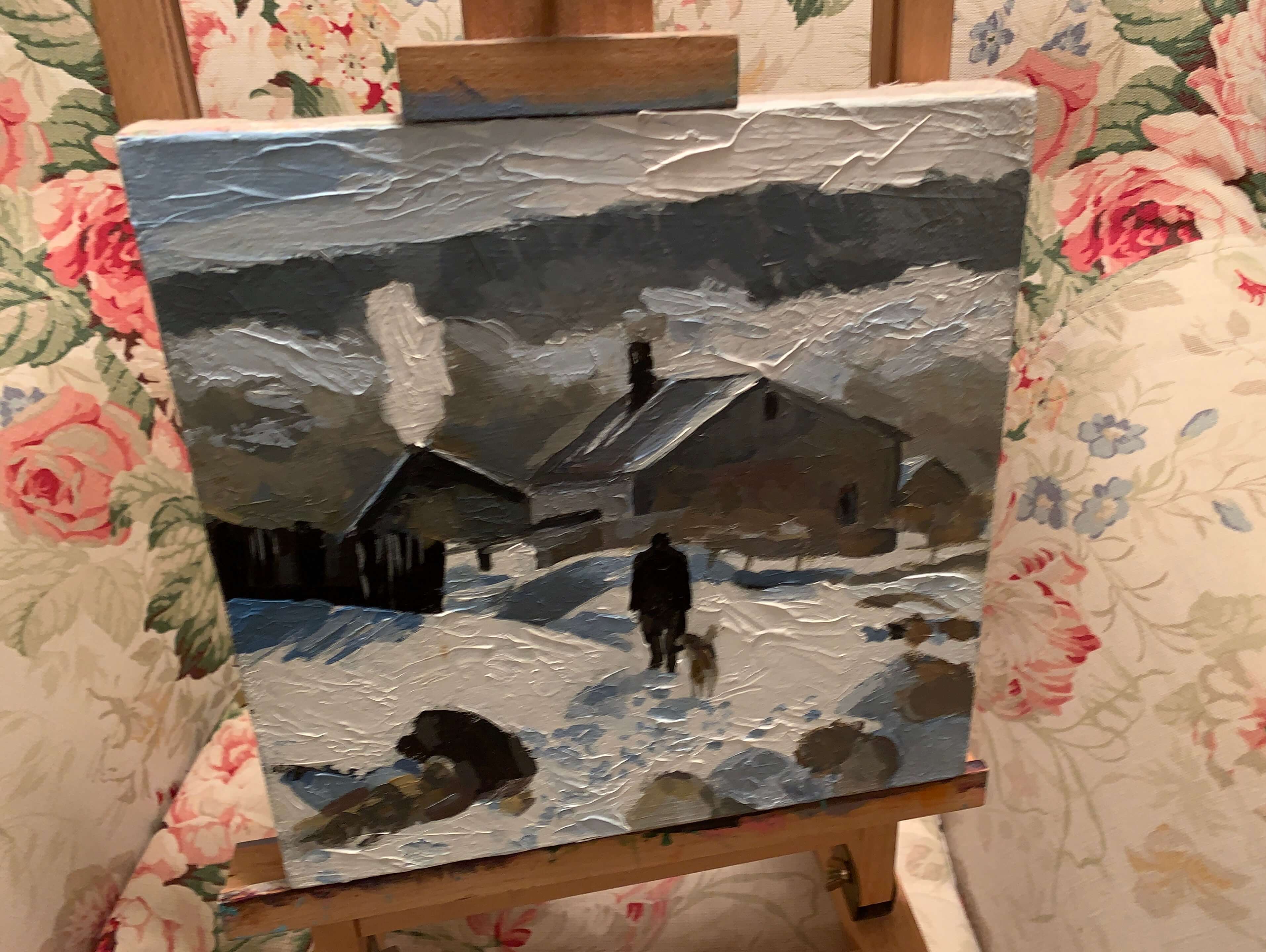
When you're promoting your work, yous want to put out a professional looking paradigm, even if you're sharing it with friends, y'all never know who they're going to testify.
Solution: Crop your epitome
Photos of paintings in books or gallery websites are almost always cropped to clean edges.
Step-by-step: editing stage or post-processing
Using the 'crop tool' to crop and frame your moving-picture show to avoid the lark of background

Tap 'Edit'
Tap the ingather icon
Sometimes the image volition swivel around as the phone tries to suit the level automatically. Past pressing and moving the dial under the image you can modify the bending, try to line it up with a straight edge on your canvas.
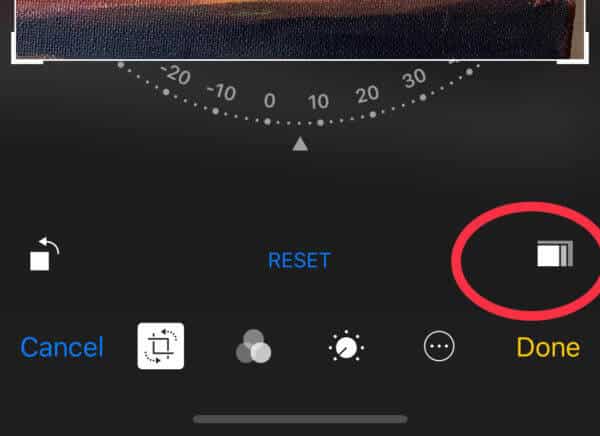
Then tap the rectangular icon in the righthand corner
This shows a range of unlike image ratios. If you know the ratio of the canvas you are using you can select it or click 'original.'
Pull in one of the corners of the frame; this will show you a preview of your ingather.
When you're happy with your selection press 'Done.'
Pro tip: If you want to include your background in the terminal shot, be mindful of what's showing. Having some background around the epitome tin can help when showing a sense of scale or works in progress.
What most photographing indoors?
In that location will be occasions when it's impossible to photo your piece of work using daylight as your low-cal source, maybe you're on a deadline and it's gone dark outside.
The only option is to shoot under regular household bulbs and the main consequence will be getting plenty illumination for the small-scale sensor in the telephone – desperate measures call for an App or two and a brew and a biscuit!
You lot can encounter below on my light meter how much difference there is in illuminance indoors compared to outside (fifty-fifty taking an outside reading in a shady spot.)

2889 lx (Lux) in illuminance in the shade outdoors

158 sixty (Lux) in illuminance indoors away from window (nearly a 95% drop in illuminance!) at my kitchen tabular array in the evening it was 75 lux)
The illuminance of an area is measured in lux and y'all can run into below the huge variation from outside to inside.
- Inside, furthest away from the window – 158 lux
- Inside, the centre of the room – 719 lux
- Outside in evening shade – 2889 lux
- Outside in evening sunlight – 22,000 lux
- Very vivid daylight can become close to 100,000 lux
I cover diverse Apps below that help by giving more functions to overcome this.
Photographing with your iPhone in artificial calorie-free – extra Apps (and a brew) needed!

- Moment App: iPhone & Android (paid app)
- Snapseed App: iPhone & Android
Issue #5: Blurred prototype

Handheld with a 1-second shutter speed
If you're photographing a moving field of study you wouldn't exist surprised to see a blurry image, but when yous're shooting a static canvas within, you may also have to consider mistiness – it's just yous're the 1 that is moving not the painting.
It all stems from using a handheld phone indoors with low illuminance.
Solution: Use a tripod and adjust your shutter speed
Depending on your illuminance you lot may need a tripod.


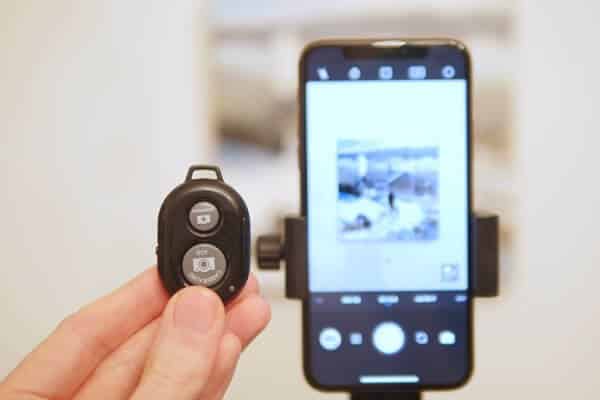
This upkeep tripod came with a bluetooth trigger so you tin can trigger the photographic camera shutter without having to touch the telephone (amazing for long range selfies!)
Pace-by-step: capture stage
Download the Moment App (paid) and open it

Click the Flash Off
Prepare the timer to 3 seconds to forestall camera milk shake
Click File Type to salvage JPG

Move the ISO to 32
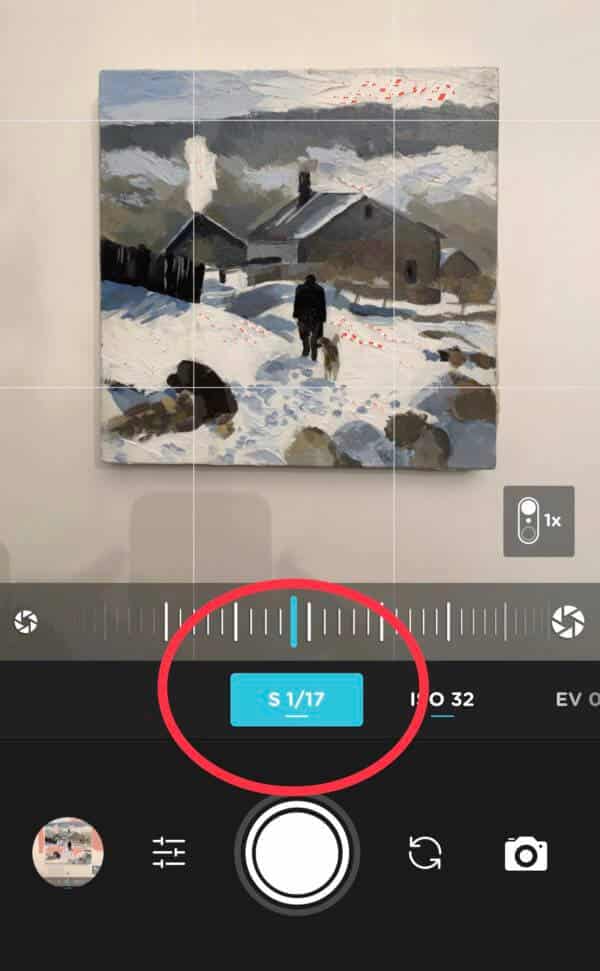
So move the shutter speed until yous start to see red lines on any white area in the painting.
Take the shot.
Why?
Shutter speed – A mensurate of how long a photographic camera's shutter stays open up to let light in.
When you're taking photos in bright natural daylight, the camera shutter can open quickly and allow enough light onto the sensor in a very brusque corporeality of fourth dimension because the light source is so bright.
This is chosen a high or fast shutter speed resulting in no mistiness.
When you're indoors and there isn't as much low-cal, the shutter speed has to be open longer to allow enough light in from the minor or less bright light source. This is called deadening shutter speed. The longer the shutter is open up, the longer you have to stay even so and the higher the chance there is of camera shake, which can brand the paradigm wait blurred.
When you're using a shutter speed lower than 1/60th second, any slight movement when you're belongings your iPhone tin can exist exaggerated and cause blur.
Pro tip: Shutter speed is measured in fractions of a second. The shutter tin can open for 1 second or ane/100th of a second, or a ane/000th of a second. They are all different shutter speeds.
- 1 second
- 1/tenth second
- 1/100th 2nd
- 1/1000th 2d
Result #6: Image looks too night (or too lite)
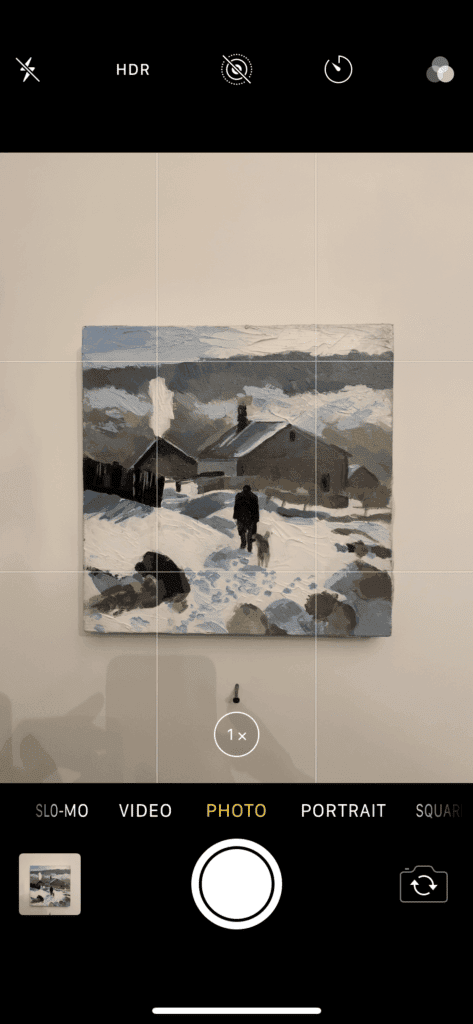
Considering phones are so smart, you can be fooled into thinking that they know exactly what you're looking at. We're so used to confront recognition that when yous agree a phone in front end of your painting, it can be annoying when the shot comes out likewise night.
It's all nigh the exposure.
Solution: Tweak your exposure
Here's a quick examination you can endeavour.
Hold up a slice of white paper in front of your camera and allow it fill the frame, don't adjust anything and take a photo. Detect how the camera creates a general grey tone, the white newspaper looks gray.

White paper in front end of the camera without adjusting exposure is captured as grey
This is just a reminder that if you're photographing a painting that has lots of white in information technology and you lot hold your camera so the painting fills the entire frame, the camera will tend to underexpose the image and your whites will look grey.
'Exposure compensation' is fundamental. In other words, you are going to have to adjust your exposure manually.
Step-by-stride: capture phase
The steps below are for an iPhone (but almost smartphones will accept a like function)
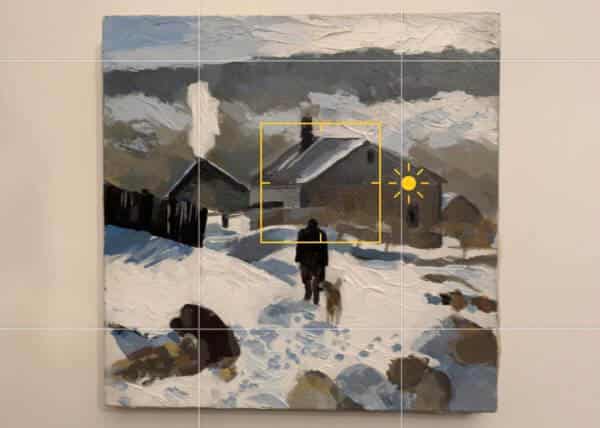
Tap the camera screen and a yellowish box volition announced
Side by side to the box is a sun icon.
Slide your finger up and down to adjust the exposure.
The master problem I've constitute with the in-built camera office is information technology doesn't tell you lot if you've overexposed the image too much in a light painting or underexposed in a dark painting, you have to do information technology by eye.
Gaining more control
The Moment app has a groovy feature that shows yous when your highlights are clipping by displaying diagonal cerise lines over parts of the epitome that are on the brink of being blown out.
Footstep-past-step: capture stage
Open up the Moment App.
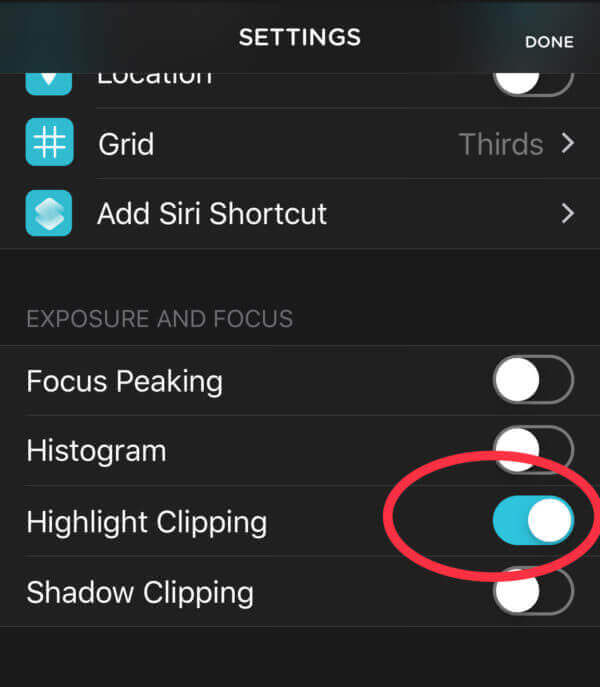
Go into Settings
Under 'Exposure and Focus' plough on 'Highlight Clipping'
You can also plough on 'Shadow Clipping' if photographing a dark painting, this will bear witness as blue diagonal lines when yous're losing details in the shadows. I endeavor and get a few blue lines on the very darkest black areas.

The red lines on the Moment app show the highlight areas that are blown out or 'clipping'
Backlog red lines will mean you are losing information from the image, I try and become a few cerise lines only on the very brightest white area.

To adjust the exposure value, tap EV 0.0
Slide the dial left or correct until you're happy
Why?
Two common scenarios can cause the camera to under or overexpose.
- Your painting has lots of white in the painting
- Your painting has lots of black in the painting
Your camera is always looking for an average tonal exposure of an image, it doesn't necessarily know if there is a large amount of white of blackness in the painting, it'due south trying to expose for a mid-tone.
Upshot #seven: You've got glare

If you're in a depression-level calorie-free space, an obvious choice would be to add more light in. It might seem a proficient thought to use the camera flash, makes sense right?
Solution: Plow your flash off
The issue is that the flash is on the aforementioned axis as the camera lens, so if yous have a glossy or even semi-glossy paint surface, the flash is reflected direct back into the lens resulting in glare.
Step-by-stride: capture stage
Plow off the camera flash.
Open up the camera, and you'll see the flash icon in the top left corner.

Merely tap the wink icon on the meridian of the camera screen
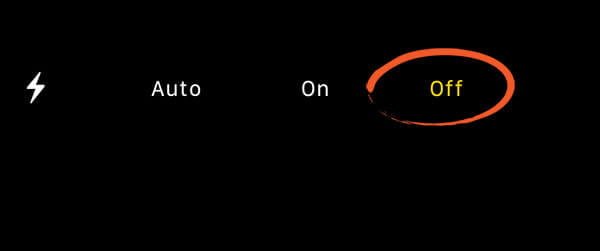
Then tap 'Off' and you're set
Issue #8: Digital noise

This is one of these things that y'all might not notice immediately but if you zoom into your image you tin run into footling speckles, the colours tin can look a little bit bogus and the edges not as crisp.
This is known as digital noise.
Solution: You need a tripod & to suit ISO
Attaching your telephone to a tripod is the starting time step.
Step-by-step: capture stage
Open up the Moment App
Motion the ISO dial to lower the ISO to 32 (this is the recommended setting for this App)

Then conform the shutter speed to gain a correct exposure – until you offset to see the red diagonal lines on just the lightest white in your image.
(On the inbuilt camera y'all won't be able to run across this information considering it's all happening automatically. On third-party apps, you can encounter more details on what the photographic camera is doing.)
Why
In issue #five we learnt about how shutter speed (the amount of fourth dimension the camera shutter is open) tin modify the amount of calorie-free hitting the sensor.
1 of the other ways digital cameras control the exposure is by making the sensor more sensitive to light. The sensitivity of the digital moving picture sensor to light is called ISO (pronounced: eyeso)
ISO – The sensitivity of the film/digital sensor to light
The lower the ISO number, the less 'racket' you go in an image
A low ISO would be the least sensitive to lite just give yous crisp images and the most accurate colours
A high ISO is more sensitive to light, but the paradigm tin can endure from digital noise and the colours aren't every bit authentic.
So if you lot identify your phone on a tripod you tin can use a longer shutter speed with a lower ISO to capture a noise free only well-exposed image.
Pro tip: With traditional cameras, you lot have an 'exposure triangle' yous tin modify aperture, shutter speed and ISO, the aperture on your phone is stock-still and can't be inverse, so nosotros can only alter the shutter speed and ISO.
Issue #9: Colour cast
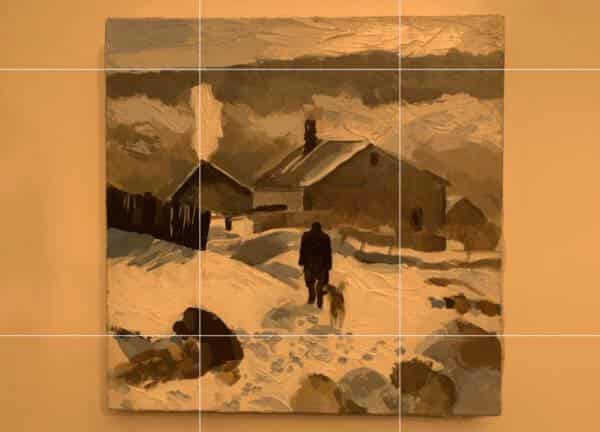
Your eyes are amazing at perceiving colours in dissimilar lights, so if you have a piece of white newspaper inside or outside you only perceive it as a bit of white paper.
Simply your photographic camera has to change its settings to balance the colour. This usually happens automatically and is called auto white balance. Most phone cameras are pretty expert at doing this.
Sometimes a problem occurs when your camera hasn't fully adapted to the correct colour light of your room, resulting in commonly a blue or orangish filter over the whole of the scene.
This is called having a color bandage.
Solution: Adjust the white balance
If the image has a color cast or looks the wrong colour y'all can change the white balance in one of 2 ways:
- Before you shoot your photograph at the capture stage, I'm going to show you how using the Moment App.
- Or you can adjust the colour bandage with post-processing software, in the editing stage and I'1000 going to utilize the Snapseed App.
The color of daylight changes subtly throughout the day, these are called changes in colour temperature. A frosty winter'southward morning would have a cool lite, whereas a glowing dusk would be a warm light.
Artificial low-cal bulbs come in different colour temperatures and the colour of the bulb are shown on a Kelvin scale. The higher the Kelvin number, the bluer the colour volition exist. It's easiest to see the different colour temperatures on the dorsum of light bulbs chosen 'correlated colour temperature' CCT.
CCT values are described in degrees Kelvin, so a 2800K (2800 degrees Kelvin) would be a warm light. A photography standard for 'daylight' is 5600K
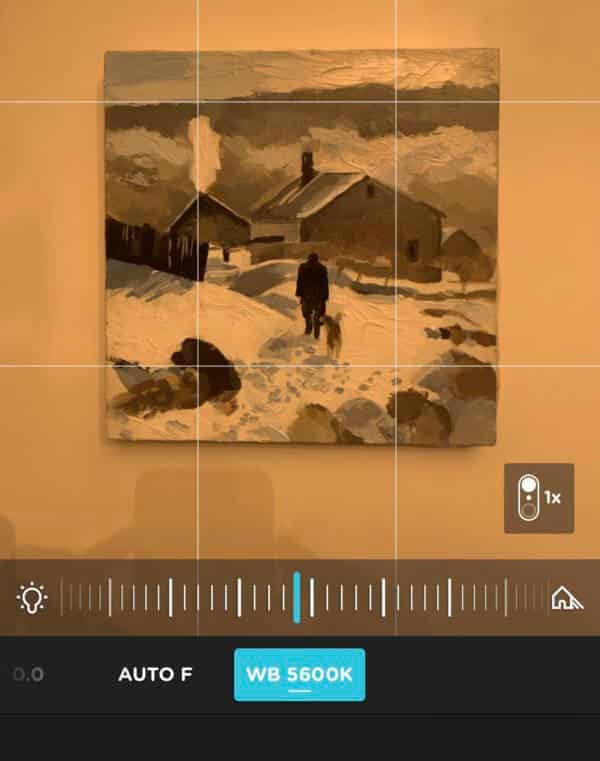
Notice how the White Rest (WB) is 5600K and the CCT of the lite bulb is 2800K then it reads every bit orangish
Step-past-step: capture phase
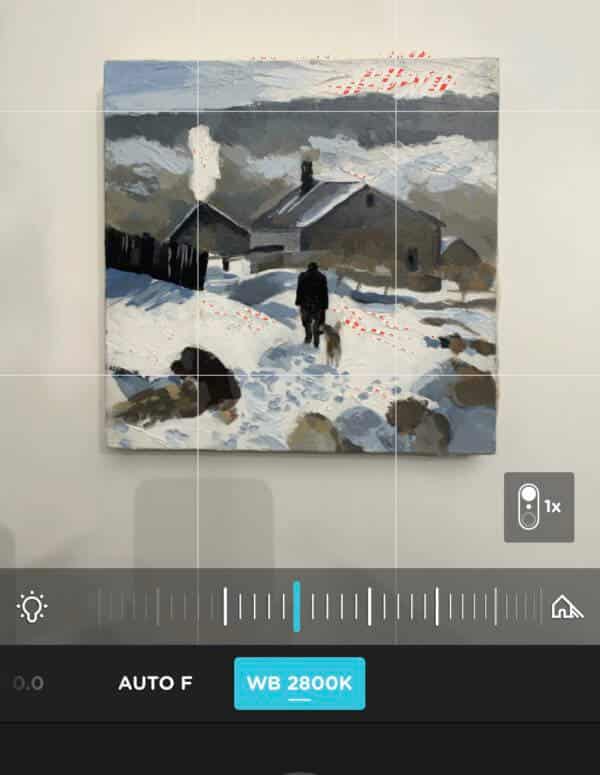
Open the Moment App
Scroll along until you see AWB – Tap it
Scroll along the lightbulb icon to adjust the colour temperature
Higher up I've manually adapted the White Remainder (WB) to 2800K to match the CCT that was on the low-cal seedling resulting in a balanced colour on the photograph with no color cast
Step-by-step: Adjusting the white residuum in the editing stage or post-processing
Look for any white or neutral grey within your image or frame.
Open your image in the Snapseed App (free)
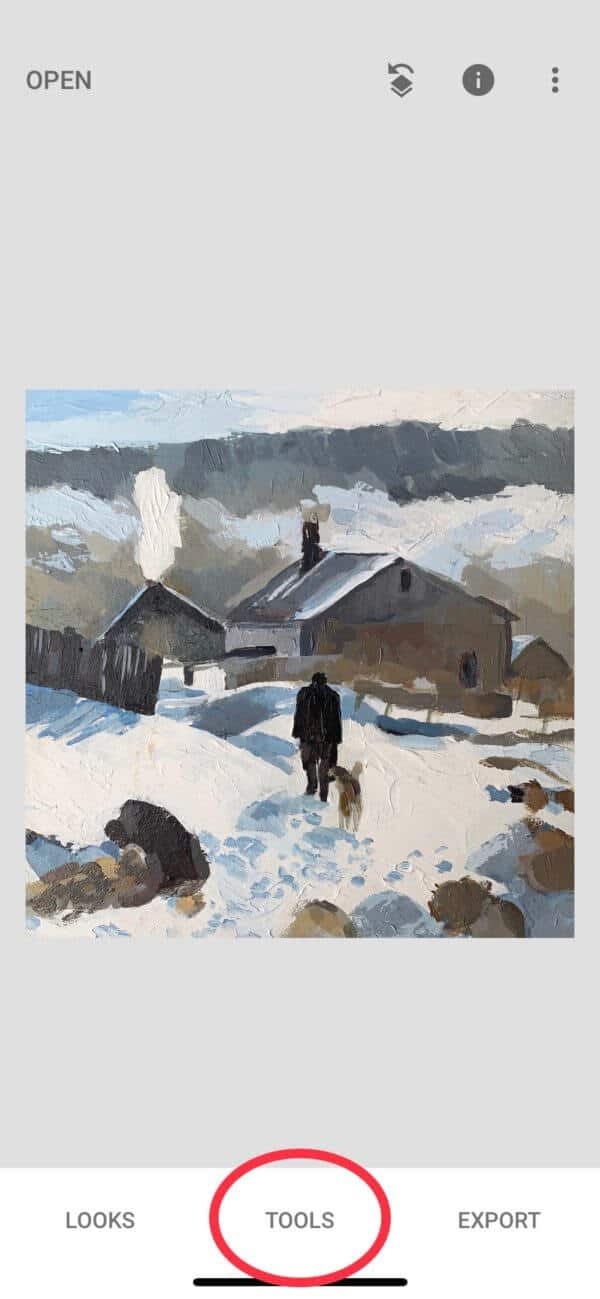
Tap on 'Tools'
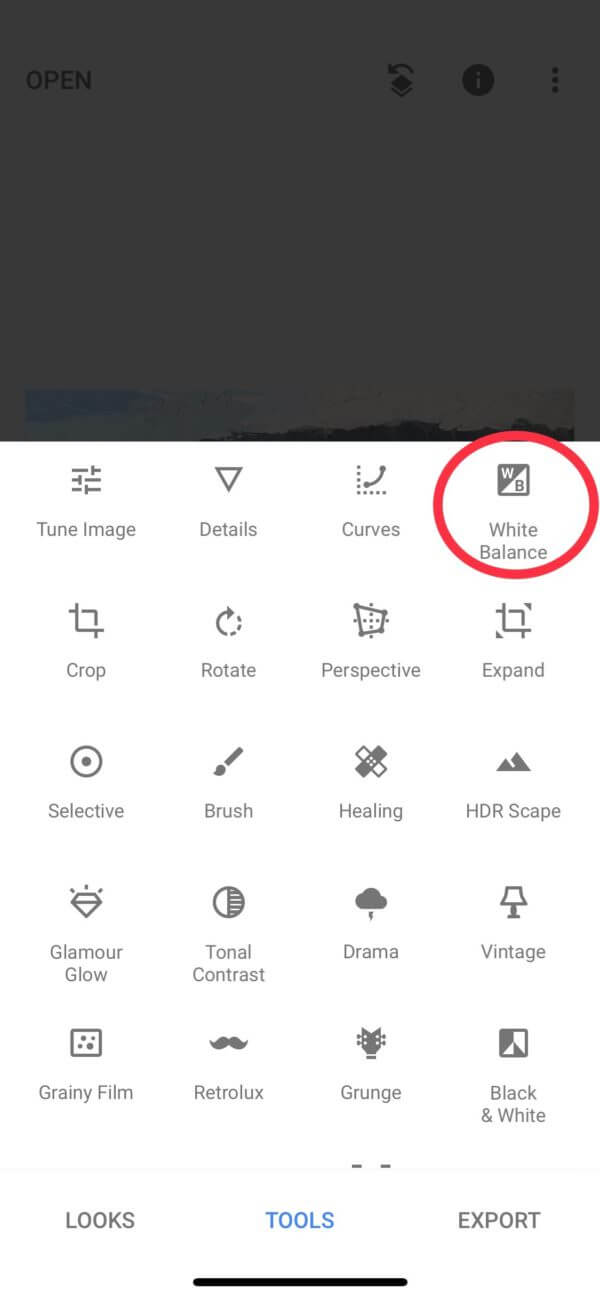
Click 'White Balance'

Click the Eyedropper icon and position over a white area of the painting

Click the tick icon and your white remainder has been adjusted.
Pro tip: You tin can likewise utilize greyness cards to include a neutral colour in your frame.
Lay a grey carte next to your painting and take your shot. When editing the image click the grey bill of fare to white residual your epitome and then crop information technology out.
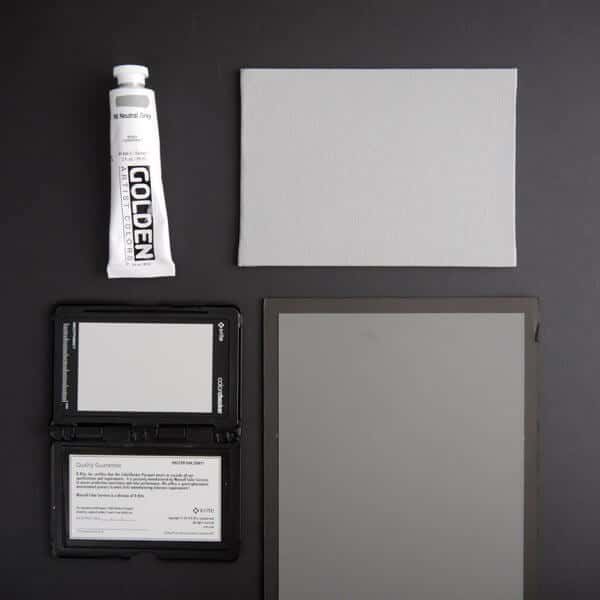
Hither are a few photography grayness cards
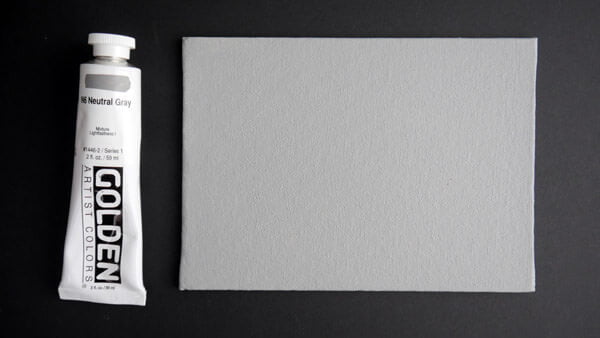
A homemade greycard using a sheet lath and Aureate Neutral Gray paint N6
Quick annotation
If you tin can photograph your artwork with your telephone using natural light and want to keep information technology unproblematic, and then the kickoff few steps should solve 90% of the issues, the extra 10% is fine-tuning using actress Apps.
If you desire to get more technical and experiment with the Apps mentioned, yous could combine them with your outside photography every bit well.
Moment App can exist actually handy for exposure display, and if yous want to delve deeper into editing your shots, and so Snapseed can be great for cleaning and colour balancing images.
If you desire to gain even more control, then the Lightroom App has amazing options for capture and tweaking colours only takes a little more than of a learning curve.
Promise you've found information technology helpful, let me know how your new photo skills turn out!
p.s. The new Simple Colour Mixing Course is coming in the side by side few weeks.
Recommended Apps
Photography apps
Moment (paid)
Halide (paid)
Lightroom (free) but paid subscription for more features
Mail service Processing apps
Snapseed (complimentary)
Lightroom (free) merely paid subscription for more features
Impact Retouch (paid) This is like a magical cloning paintbrush that repairs sections of your painting. I'd tend to use healing castor in Snapseed for smaller tweaks
Footnotes
Colour Rendering Index (CRI) – http://neiloseman.com/tag/cri/
Exam Colour Samples (TCS) – https://www.waveformlighting.com/tech/cri-ra-exam-color-samples-tcs
You tin can read about art studio lighting hither
You can read virtually basic DSLR camera setups here
Source: https://willkempartschool.com/how-to-photograph-your-paintings-with-your-iphone/

Publicar un comentario for "Is a Soft Box Good for Taking Photos of My Art?"