King Kong Vs Godzilla Picks Up Where Godzilla Raids Again Left Off Ice Berg
Godzilla is the James Bond of behemothic lizards. It's been 7 decades since he first lurched out of the ocean, begetting tidings of bodacious atomic destruction like your drunkest friend showing upwards to the Super Bowl party with a crockpot full of "queso dip" made primarily from tap water and 17 packets of macaroni cheese dust. In the decades since, the Male monarch of the Monsters has appeared in no less than 36 official films, roughly a dozen more than the British superspy.
With Godzilla vs. Kong hitting theaters and HBO Max this week, we idea it would be helpful to provide a handy viewing guide for you to get caught up on the King of the Monsters' nearly 70-twelvemonth history. There's been a handful of reboots, roughly a dozen different named monsters, and some repeated themes that have popped up over the decades, which can make the franchise feel more confusing than it actually is. Equally it turns out, there's very little overall continuity, with almost every new installment acting as a standalone feature. Only it does frequently ask you lot to have at to the lowest degree a passing familiarity with several characters and events, even if the level of familiarity required commonly goes no further than being able to point at the screen and say, "That's Godzilla." So, nosotros've cleaved down how to watch every Godzilla picture chronologically in order of events, as well as in the order in which they were released, so you can feel the franchise in whichever way yous prefer.
Godzilla Movies in Chronological Order of Events
As nosotros mentioned, the continuity of the Godzilla franchise isn't terribly strict. As long as you lot showtime with the beginning moving-picture show, you tin can jump around pretty freely without feeling dislocated (well, without feeling more confused, every bit kaiju movies are notoriously dense with their ain self-contained lore). That said, Godzilla fans tend to group the movies into several distinct eras, each with a unique tone and accept on the big smashy lizard.
Shōwa era
The "classic" flow of Godzilla movies, the Shōwa era contains virtually of the films people call up of when they picture our favorite diminutive lizard. Weirdly, fifty-fifty though this flow begins with the decidedly dour and somber 1954 original, it'south best known for the franchise'due south goofier moments, including Godzilla's ludicrous son Minilla and pretty much every pro-wrestling-style GIF y'all've ever seen of the mighty kaiju.
Godzilla (1954)
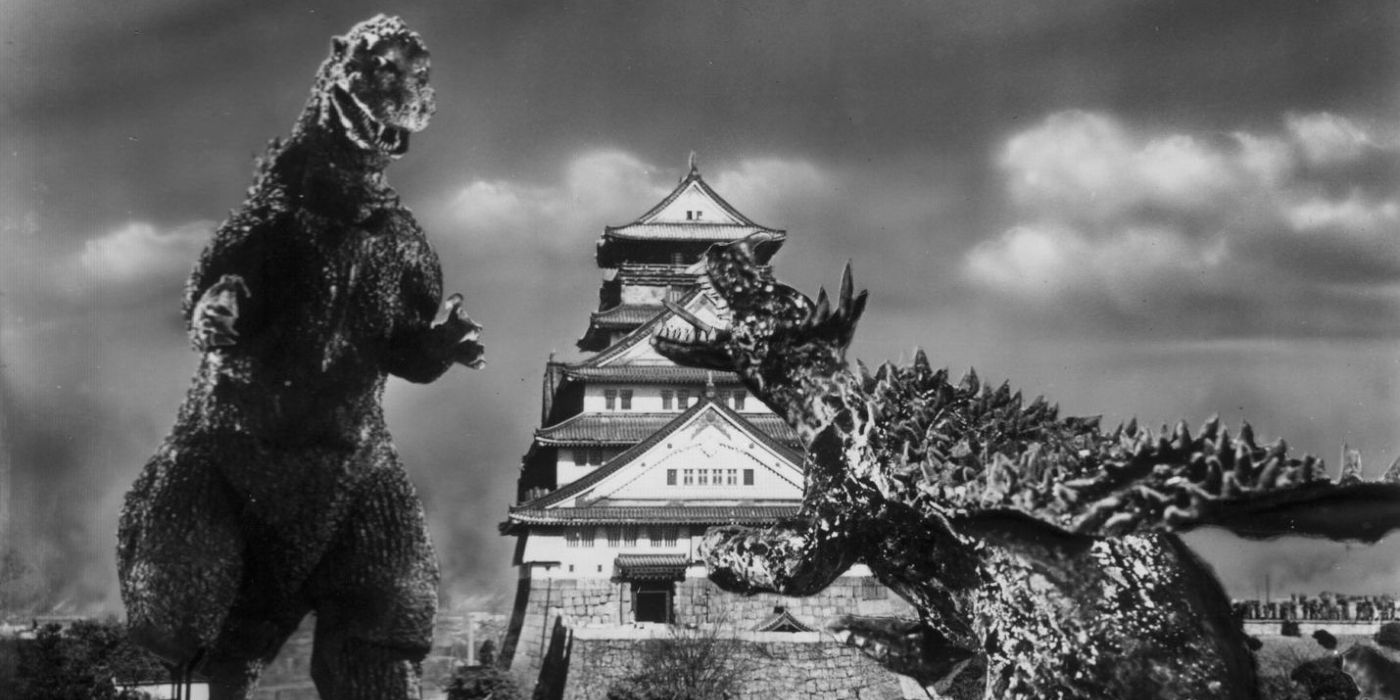
Continuing in sharp dissimilarity to the joyful camp the franchise would come to embody, the original Godzilla is a mortiferous serious apologue about the horrors of the atomic age, produced by the only country in history to have e'er experienced a nuclear attack. The movie marks the kickoff appearance of our favorite giant monster, and establishes his origin every bit an ancient brute awoken and mutated by underwater hydrogen flop testing. There'southward yet plenty of cheese to exist constitute – no amount of gruesome imagery and historical subtext tin disguise the fact that the motion picture's key antagonist is a human in a rubber dinosaur suit – but Godzilla is a shockingly effective film made all the more haunting by the fact that it was released merely ten years after the nuclear annihilation of Hiroshima and Nagasaki.
Godzilla Raids Again (1955)
Godzilla Raids Once more is technically a direct sequel to Godzilla in that it features some returning characters and references the events of the original film. But the movie quickly explains that this Godzilla is a make-new member of the same species, rather than the same radioactive lizard nosotros saw the year before. This movie also marks the first time Godzilla does battle with another kaiju – Anguirus, a baroque turtle/ankylosaurus blazon fauna who would appear in several more films in the serial.
King Kong vs. Godzilla (1962)
Our beautiful big bois squared off for the first time fairly early in Godzilla'southward career. Male monarch Kong vs. Godzilla reimagines the tragic ape as a much larger ape of considerably less tragedy. This film shares some lite continuity with Godzilla Raids Once again in that Godzilla begins the adventure frozen in an iceberg, where he has presumably been since the Japanese Regular army buried him in an icy avalanche at the end of the previous pic.
Mothra vs. Godzilla (1964)
The benevolent behemothic insect Mothra joins the Godzillaverse in this feature, once again placing Godzilla in the role of adversary equally the two duke information technology out over the prophylactic of Mothra's hatchlings. Mothra vs. Godzilla doesn't seem to share any continuity with the previous installments, although you could argue that the big lizard washed ashore subsequently the events of King Kong vs. Godzilla and continued his binge as soon equally he woke up.
Ghidorah, the Three-Headed Monster (1964)
The franchise'southward most iconic villain makes his debut in this movie, as King Ghidorah crashes downwards from space to do battle with Godzilla, Mothra, and Rodan. Ghidorah, the Iii-Headed Monster doesn't announced to share any overall continuity with the previous films apart from a basic agreement of who the main monster characters are, which is more or less the baseline for the franchise in terms of an ongoing narrative. (These movies are practically designed to be watched out-of-lodge on cable.) This is also the outset time in history Godzilla is portrayed every bit a heroic figure, which will be his role for the majority of the franchise going forward.
Invasion of Astro-Monster (1965)
Invasion of Astro-Monster is a straight sequel to King Ghidorah, the Three-Headed Monster, taking place a year subsequently the events of that moving picture. Male monarch Ghidorah has connected harassing other planets in the solar arrangement after getting kicked off of Globe by Godzilla and friends, and the conflicting inhabitants of Planet X reach out to the earthlings for assistance. Still, it turns out to be a clever ruse, allowing the Xiliens to use a heed control device on Godzilla, Mothra, and Rodan in an effort to conquer the globe.
Ebirah, Horror of the Deep (1966)
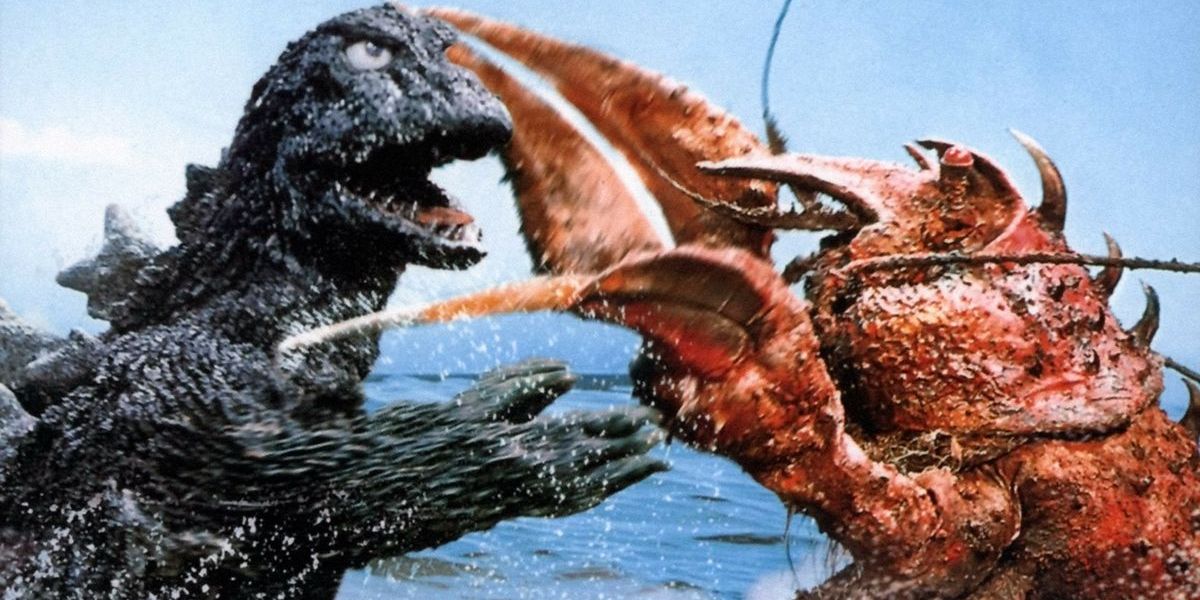
Godzilla fights a gigantic lobster named Ebirah in this installment, which carries some small-scale continuity over from the previous movie in that our lizard champion's recent boxing with King Ghidorah is mentioned. Some ado is also made of his leftover beef with Mothra from Mothra vs. Godzilla, which leads to the 2 creatures butting heads once over again in the pic'due south finale.
Son of Godzilla (1967)
Information technology is an unwritten rule of cinema that every fearsome animate being has to accept an adorable child prove up in a sequel. (Meet besides Son of Kong , Wall Street: Money Never Sleeps , etc.) Son of Godzilla introduces Minilla, Godzilla's sort-of offspring whom he rescues from the clutches of an island of killer insects. Godzilla uses bullying to teach Minilla how to fight, and the two defeat a series of praying mantises and a giant spider to create what is now the only version of "True cat'south in the Cradle" I care to hear. Son of Godzilla doesn't seem to connect to the other movies across asking you to exist able to option Godzilla out of a lineup.
Destroy All Monsters (1968)
Destroy All Monsters is kind of like The Avengers of the Godzilla franchise. This film brings together every monster from the previous films, including a few from some other Toho backdrop, for a massive battle royale against the eternal jabroni King Ghidorah. However, it also acts as a kind of reset button for the franchise, establishing a new continuity in which world peace has been achieved and with every kaiju on World now living in relative placidity on the appropriately-named Monster Island. So, while you lot'll certainly go more out of the film if y'all already recognize Minilla and Anguirus, zilch here requires y'all to be familiar with whatsoever of the characters to follow what's happening. Unsurprisingly, Destroy All Monsters is regularly cited equally one of the best kaiju films.
All Monsters Attack (1969)
All Monsters Attack doesn't appear to share whatsoever directly narrative connections with any other Godzilla moving-picture show, which is a good thing, because watching it makes yous never want to come across another rubber monster movie ever again. Substantially a loose remake of Son of Godzilla that recycles an unbelievable amount of footage from earlier movies in the franchise, the film follows a petty boy named Ichiro who shares a psychic dream link with Minilla. Every night, Ichiro dreams of Minilla and Godzilla getting into rad fights on Monster Island. This somehow gives Ichiro the confidence to fight back against his own bullies, although it's ultimately somewhat unclear if Ichiro was witnessing actual events or if all the Monster Island stuff was just a product of his own fanciful imagination.
Godzilla vs. Hedorah (1971)
Godzilla vs. Hedorah pits the fightin' dino against an amorphous hulk of sentient pollution in one of the more memorable bouts of the franchise. I saw this movie as an extremely little kid, and while my overall recollection of the film is hazy, the image of Godzilla getting his hand melted off past Hedorah'southward corrosive attacks is forever seared into my memory. Godzilla vs. Hedorah is another standalone adventure in the Godzilla franchise, which makes for piece of cake viewing if you happen to take hold of it in the middle of a marathon, but it does share some of the environmental and sociopolitical DNA of the original film.
Godzilla vs. Gigan (1972)
Godzilla vs. Gigan features the first appearance of the bizarre space monster Gigan, who is one of the more than interesting-looking creatures in Godzilla'southward stable of supporting characters. King Ghidorah one time again returns to Earth to attempt a hostile takeover, and only Godzilla and his BFF Anguirus tin terminate the invasion. Like most of the franchise, this film plays out more or less similar the latest episode of the Godzilla show, sharing well-nigh no continuity with whatsoever previous installment autonomously from the existence of Monster Isle.
Godzilla vs. Megalon (1973)
The Godzilla films accept a reputation for making major offers about casually, and Godzilla vs. Megalon might be the Cadillac of this formula. A straight sequel to Godzilla vs. Gigan, the movie opens with an underwater nuclear test so extreme that information technology sends Godzilla'south Monster Island pals Rodan and Anguirus into the heart of the Earth. The test likewise wreaks havoc on what is essentially Atlantis, and the civilization'south underwater inhabitants dispatch their giant weird beetle enforcer Megalon to bosom up the surface earth in retaliation. The aliens from the previous film, evidently yet sore over their defeat at the hands (claws?) of Godzilla and Anguirus, transport Gigan dorsum down to Earth to assist Megalon. Godzilla vs. Megalon is also notable for featuring Jet Jaguar, an Ultraman-way robot kaiju designed by a immature fan as part of a promotional contest.
Godzilla vs. Mechagodzilla (1974)
Godzilla teams upward with a domestic dog gremlin affair named King Caesar to fight the extraterrestrial robot imposter Mechagodzilla. The evil cyborg is sent by a mysterious race of ape-similar aliens who intend to use the creature to conquer the World, considering plainly every unmarried civilization in the galaxy has the exact same program. There's some light continuity in this film, specifically in references to Godzilla'south contempo benevolence and his long-continuing brotherhood with Anguirus
Terror of Mechagodzilla (1975)
Terror of Mechagodzilla is a direct sequel to Godzilla vs. Mechagodzilla that sees the ape-like aliens (called the Simeons) rebuild Mechagodzilla with the help of a mad scientist. It but so happens that the same mad scientist has also devoted his life to researching the mysterious Titanosaurus, and he teams his monster up with the aliens' creation in a bid to wipe out civilization. Thank you to diminishing box office returns placing it equally the everyman earning entry in the franchise to date, Terror of Mechagodzilla was the last Godzilla moving-picture show of the Shōwa era, and the big guy would non be seen in another official Toho project for nearly x years.
Heisei era
The Heisei era is much darker than the Shōwa era, an attempt to return Godzilla to his roots as an antagonist and as a grim apologue of the nuclear arms race. Information technology also includes the longest stretch of continuity of whatsoever menstruum of the franchise, with each film directly carrying events and characters over into the adjacent.
The Return of Godzilla (1984)
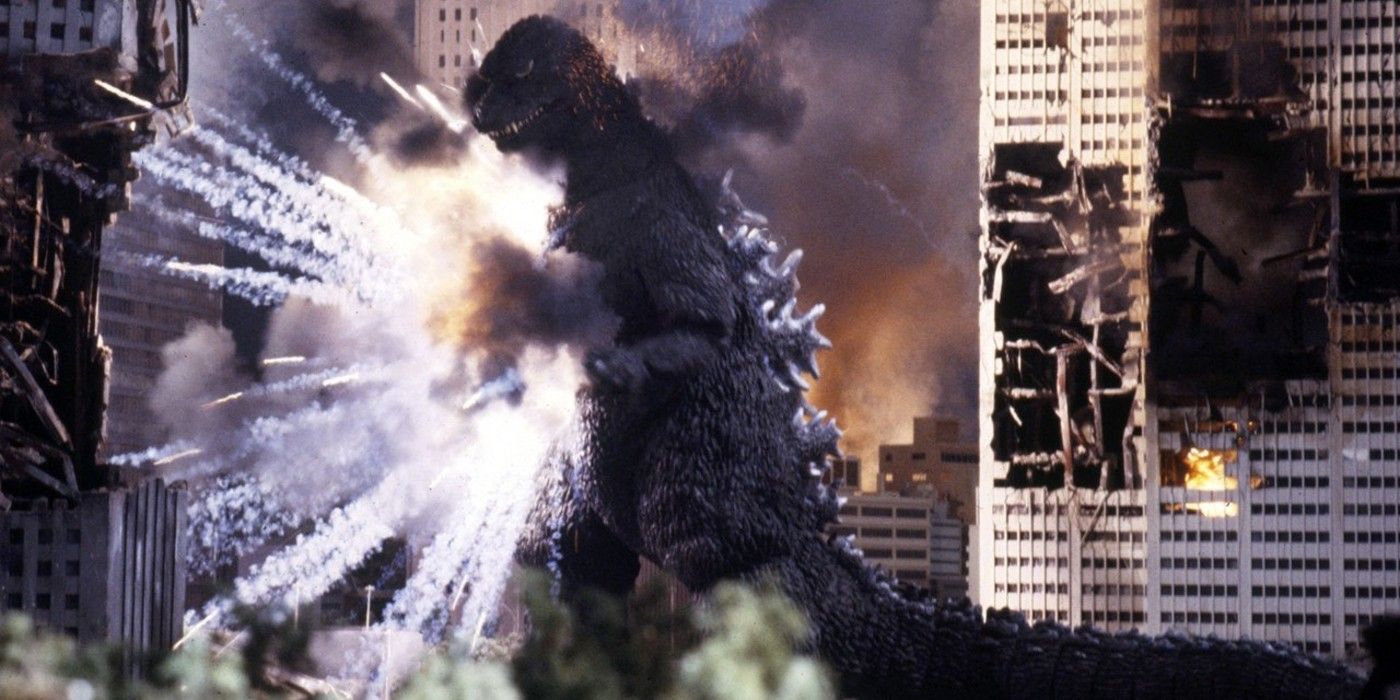
The Return of Godzilla is a straight sequel to the 1954 original that besides serves as a reboot, resetting the franchise and ignoring the events of every other film from the Shōwa era. (Poor Minilla.) Consequently, the Godzilla of this motion-picture show is once once again a terrifying engine of destruction meant equally an allegory for the world'south rapidly expanding nuclear arsenal. The political commentary of the first film is updated for the 1980s - at one point, the U.Southward. destroys a Soviet missile using what is conspicuously meant to be its much-ridiculed SDI system, derisively nicknamed the "Star Wars program."
Godzilla vs. Biollante (1989)
Godzilla vs. Biollante continues the storyline of the Heisei era, with Godzilla trapped inside a volcano afterward the events of the previous movie. A scientist experimenting with Godzilla'southward Dna accidentally creates a monstrous plant-like animal called Biollante, which also contains the Deoxyribonucleic acid of the scientist'due south dead daughter. Biollante is i of Godzilla's most memorable opponents; the creature design is fascinatingly grotesque, and the concept of the monster's creation is effectively unsettling. This installment is also notable for featuring a shift in the franchise'south anti-nuclear messaging to focus on the emerging field of biotechnology and genetic engineering, with Godzilla once again serving equally less of an antagonist and more of a cautionary tale about the dangers of unchecked scientific discovery. This moving-picture show as well features the outset appearance of the psychic Miki Saegusa (Megumi Odaka), whose telepathic link to Godzilla will play a function in the rest of the films of the Heisei era.
Godzilla vs. King Ghidorah (1991)
It wouldn't be a Godzilla era without King Ghidorah rearing its many heads. The evil space dragon returns with a new backstory in Godzilla vs. Male monarch Ghidorah , this fourth dimension every bit the creation of a grouping of time travelers who journey to modern-twenty-four hours Nippon challenge to be from a future in which Godzilla has destroyed the world. They trick their contemporary counterparts into allowing them to destroy Godzilla before he is mutated past the hydrogen bomb tests in 1954, leaving an baby Ghidorah in the past to accept his place. The villainous time lords and then return to the present 24-hour interval and use the at present fully-grown Ghidorah to try and conquer the planet, and only Godzilla can stop them. It technically follows the events of the previous two films, but the movie'due south time-hopping premise primarily references the 1954 original.
Godzilla vs. Mothra (1992)
Godzilla vs. Mothra takes place immediately after the events of Godzilla vs. King Ghidorah, but actually the only plot point that y'all need to know is that Godzilla ended the previous film at the bottom of the sea once once more after defeating Mecha-King Ghidorah. However, Godzilla sheds the semi-heroic role he played in the past ii movies and reclaims the curtain of "grumpy shithead" that made him famous. In this picture show, Godzilla does battle with Mothra and its bat-like twin kaiju Battra for no apparent reason (run across "grumpy shithead," above), ultimately killing the latter and getting trapped beneath the Pacific Ocean once again.
Godzilla vs. Mechagodzilla 2 (1993)
Despite its championship, Godzilla vs. Mechagodzilla Ii is actually a sequel to 1991's Godzilla vs. King Ghidorah rather than the 1974 film Godzilla vs. Mechagodzilla. Directly after the defeat of Mecha-Rex Ghidorah at the cease of Godzilla vs. Male monarch Ghidorah, the Un uses the remains of the cyborg to build Mechagodzilla and a flying tank chosen Garuda. (Corking-eyed viewers volition detect that Garuda kind of looks like a jetpack cannon designed to be worn by Mechagodzilla, which is exactly what happens in the film's epic finale.) Godzilla vs. Mechagodzilla II also features the offset Heisei era appearances of Rodan and Baby Godzilla.
Godzilla vs. SpaceGodzilla (1994)
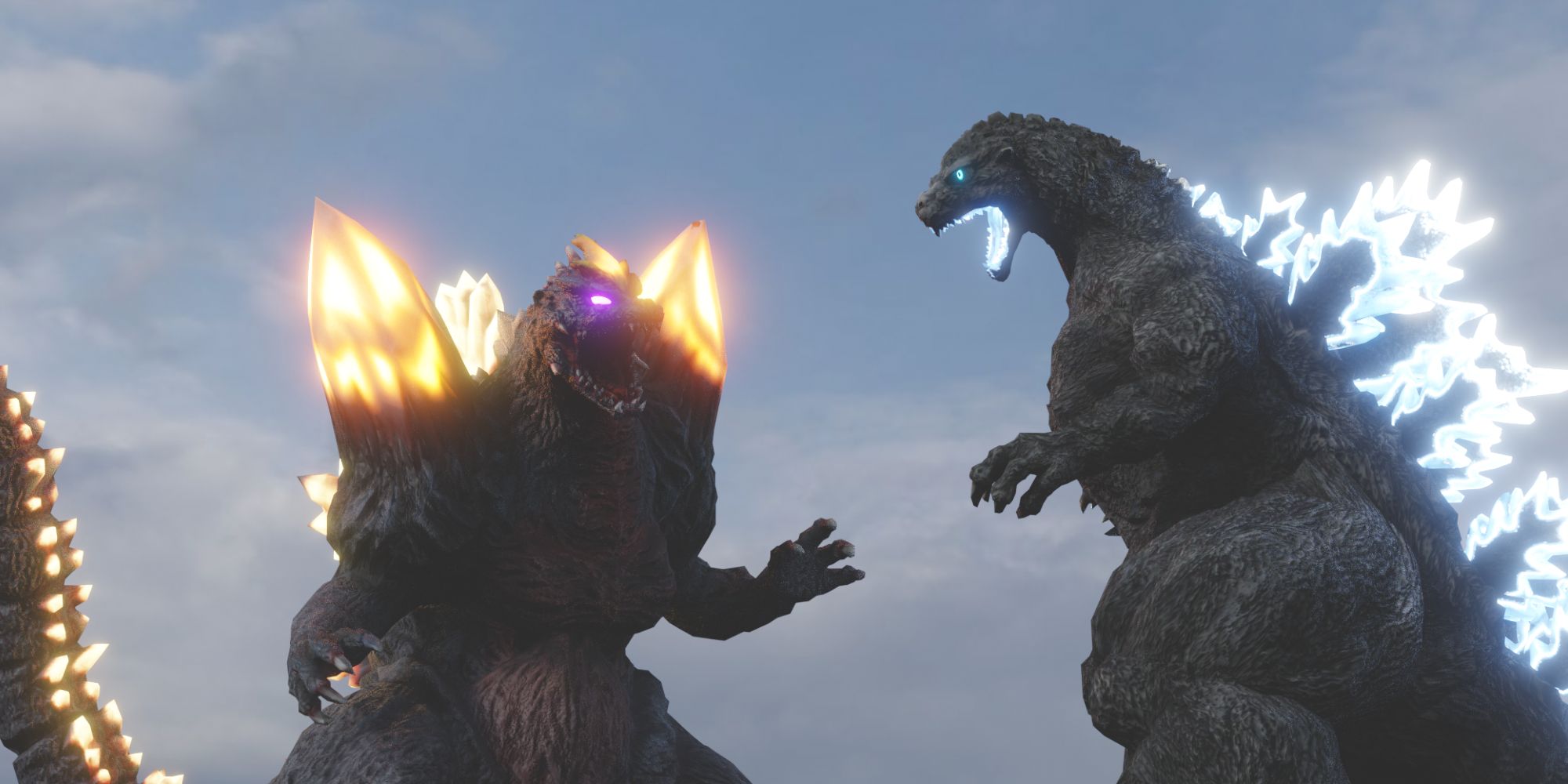
The tremendously-named SpaceGodzilla is arguably 1 of the most assured characters in the Godzilla franchise side by side to Godzilla himself, and he makes his first appearance in this movie. Sometime after the events of Godzilla vs. Biollante and Godzilla vs. Mothra, SpaceGodzilla crashes down to Earth as a effect of spores jettisoned into the cosmos by Biollante and Mothra. Godzilla and Baby Godzilla join forces with M.O.M.U.Due east.R.A., a mecha graphic symbol from an earlier Toho production titled The Mysterians reimagined in this movie equally the U.N.'s follow-upwards to the destroyed Mechagodzilla, to fight the interstellar bad guy. SpaceGodzilla sports an extremely fun character design and a dynamic power set, making it one of the more memorable additions of the Heisei era.
Godzilla vs. Destoroyah (1995)
The final motion-picture show of the Heisei era pits a dying Godzilla against a swarm of mutant crabs chosen Destoroyah. Godzilla vs. Destoroyah introduces an interesting chemical element to the franchise, revealing that Godzilla's heart operates like a nuclear reactor and that, as such, information technology will eventually melt down. The planet is saved from the cataclysmic smash when Baby Godzilla, at present called Godzilla Junior, absorbs all of the free energy from his father's exploding corpse to become the new Godzilla. Sunrise, dusk.
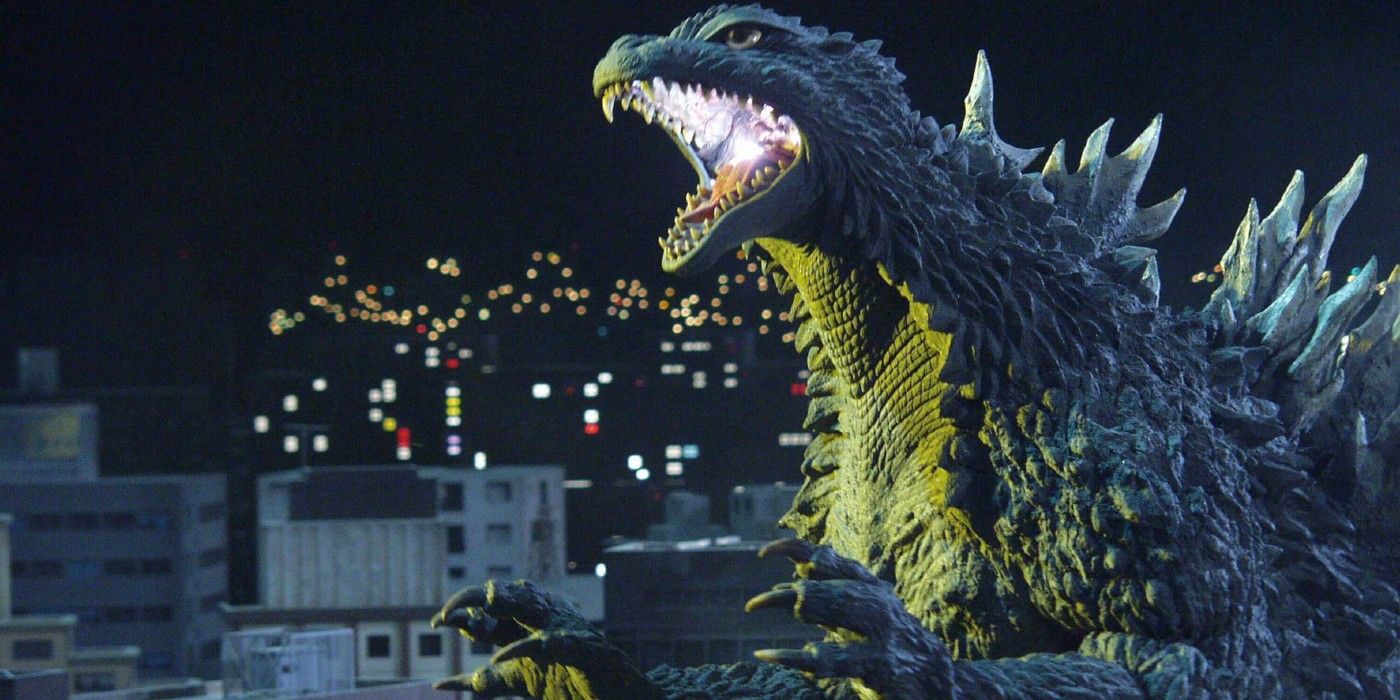
Millennium era
The Millennium era of Godzilla movies goes in the reverse management of the Heisei era, with most no film in this period sharing whatsoever continuity with each other (Godzilla Against Mechagodzilla and Godzilla: Tokyo S.O.S. beingness the only exceptions). Its tone is a mix of the previous ii eras, but the primarily villainous label of Godzilla is closer to the Heisei flow.
Godzilla 2000: Millennium (1999)
Godzilla 2000: Millennium smashes the reset push button once more, retconning the events of every picture from the Heisei and Shōwa eras except for the 1954 original. Godzilla returns to his roots as an oblivious chaos machine, a nuclear hulk who occasionally emerges from the depths to demolish coastal cities, the kaiju equivalent of hurricane season. Notwithstanding, this time aliens have arrived to try and steal Godzilla's regenerative DNA to achieve eternal life and dominion the Earth. The aliens somewhen employ the Dna to clone their own superbeing called Orga, a plain-featured monstrosity bearing a not-adventitious resemblance to the Godzilla from the 1998 American film directed past Roland Emmerich, that does boxing with Godzilla in the finale.
Godzilla vs. Megaguirus (2000)
Megaguirus, A.M.A. Yoked Mothra, makes its debut in this film, the gigantic queen of a race of interdimensional insectoid creatures that wind upwards on Earth cheers to an experimental anti-Godzilla weapon that creates miniature black holes. Despite being the second film in the Millennium era, Godzilla vs. Megaguirus disregards the events of Godzilla 2000, once again wiping the slate of films totally clean save for the 1954 original.
Godzilla, Mothra and Rex Ghidorah: Behemothic Monsters All-Out Attack (2001)
The extensively-titled Godzilla, Mothra and King Ghidorah: Giant Monsters All-Out Assault features my favorite dopey-looking horned bat rhinoceros Baragon. Interestingly, it too recasts King Ghidorah as a benevolent protector of the Earth, who must bring together forces with Baragon and Mothra to thwart a rampaging Godzilla. Only like the previous film, this picture show serves as a direct sequel to the 1954 original and ignores every other installment in the franchise. This entry as well has the distinction of offering an even more than baffling wrinkle to Godzilla'southward origin story, positing that the creature is imbued with the souls of everyone killed in the Pacific theater of Globe State of war Ii.
Godzilla Against Mechagodzilla (2002)
Godzilla Against Mechagodzilla reimagines Mechagodzilla as a Voltron-style giant robot controlled by a team of man pilots, rebooting the franchise once again to wipe the slate make clean of everything except for the 1954 original. Godzilla retains the adversary status he's enjoyed for the entire Millennium era, fighting Mechagodzilla to a standstill in the film's finale that leads directly into the next installment.
Godzilla: Tokyo Due south.O.Due south. (2003)
Picking up one twelvemonth later on the events of Godzilla Against Mechagodzilla, the Japan Cocky Defense Force (JSDF) hatches a programme to bring Mothra into the fight confronting Godzilla every bit they repair the damage Mechagodzilla sustained during the previous motion-picture show's climactic battle.
Godzilla: Final Wars (2004)
Embracing the impressive chaos of its title, Godzilla: Last Wars doesn't fifty-fifty seem to share a continuity with the original 1954 motion picture, much less whatsoever other moving-picture show in the Godzilla franchise. It plays out like an all-star game featuring the biggest performers of the previous several decades of films, including Godzilla, Minilla, King Ghidorah (hither called Monster X), Anguirus, Rodan, Mothra, King Caesar, and Hedorah, among many others. This movie could essentially exist chosen "Godzilla Beats the Shit Out of Everything," because that is exactly what happens earlier the iconic kaiju peacefully returns to the sea with his goofy child in tow.
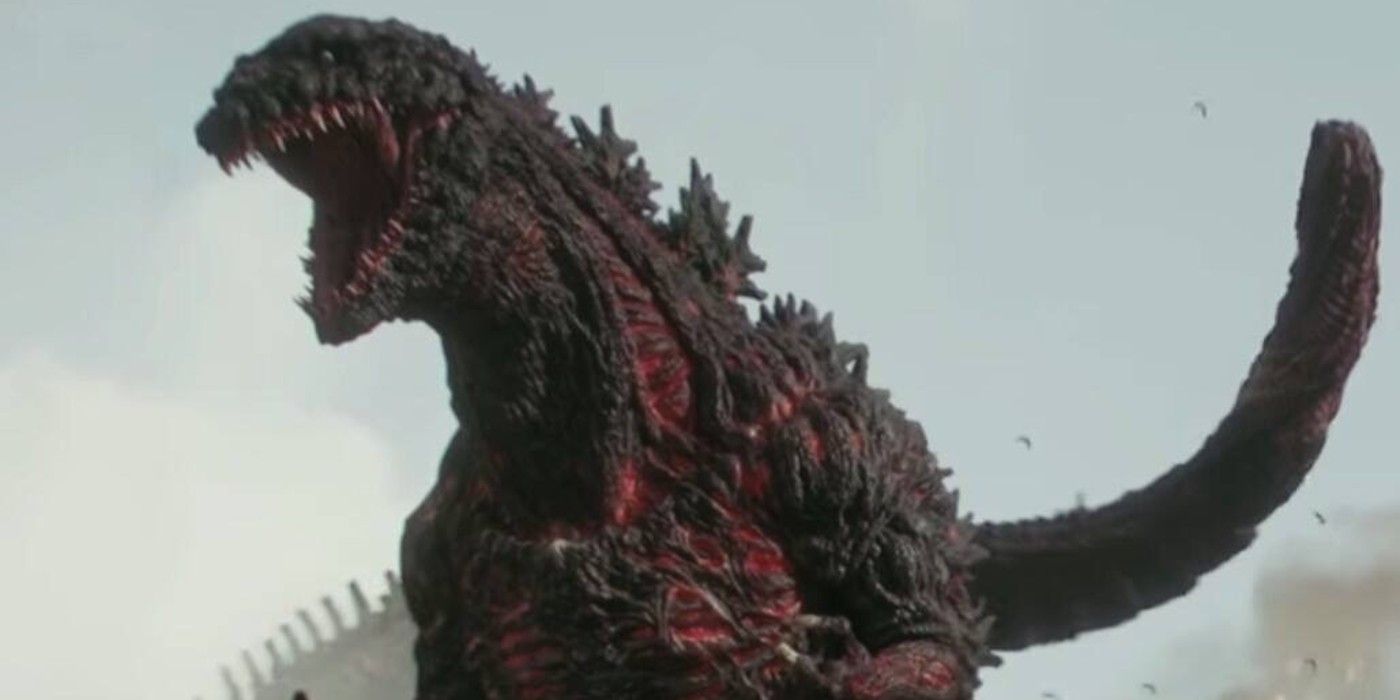
Reiwa era
The Reiwa era began with the 2022 live-action reboot Shin Godzilla and continued with a self-contained trilogy of blithe features. This period contains the biggest narrative changes in the Godzilla franchise; in particular, the animated trilogy takes place in a afar futurity, long afterward the entire planet has fallen to Godzilla.
Shin Godzilla (2016)
Shin Godzilla completely reboots the franchise, offer a modern-day origin for Godzilla that was conspicuously inspired by the Fukushima disaster in 2011, a massive nuclear accident involving multiple meltdowns and hydrogen explosions following the Tōhoku convulsion and tsunami. Godzilla is still a neutral engine of destruction in this film, but here he serves as an indictment of government inaction and inefficient hierarchy as Japanese officials continuously scramble to provide belated and ineffective responses to each Godzilla assault. Godzilla also gains the Hulk'southward ability to absorb incoming attacks and gain their strength, which is undoubtedly a reference to the strained sense of security provided by the concept of mutually-assured destruction – you tin can bomb Godzilla all you desire, but in the terminate it'south just creating a bigger trouble for the rest of the planet that will somewhen get untenable.
Godzilla: Planet of the Monsters (2017)
The commencement animated film in the franchise, Godzilla: Planet of the Monsters likewise updates the setting to a future in which humans abased Earth to Godzilla centuries earlier. The picture follows a ship full of colonists that attempts to render to Earth to destroy Godzilla and repossess the planet. It's one of the more narratively dense films of the franchise, thanks in office to its anime bones, only it's largely self-contained in that it does not seem to share any continuity with any previous Godzilla movie. However, information technology does end in a cliffhanger that leads about directly into the side by side movie.
Godzilla: City on the Edge of Battle (2018)
The colonists regroup later their disastrous assail on Godzilla at the cease of the first movie and learn of a mysterious facility containing nanometal that was used to create Mechagodzilla. The nanometal can apparently be revived and used against Godzilla - the but catch is, the nanometal needs to assimilate living hosts (willing or otherwise) in society to piece of work. The nanometal predictably turns out to be a bigger treat to the planet than even Godzilla, resulting in a existent Empire Strikes Back downer of a climax that teases the next film.
Godzilla: The Planet Eater (2018)
The final installment of the Planet of the Monsters trilogy sees the resurrection of King Ghidorah equally the principal adversary of the franchise. Information technology is a direct sequel to City on the Edge of Battle and wraps up the continuity established by the previous two animated films with a satisfyingly hokey rumination on why we tin't all just share the planet and live together in peace.
American Movies
There'southward been a handful of attempts over the years to build a franchise of American Godzilla movies that hasn't experienced much success until Legendary's MonsterVerse.
Godzilla, King of the Monsters! (1956)
A localized version of the original Japanese release with Raymond Burr sweatily added in and approximately thirty minutes of footage removed, including the majority of the political references and the direct connections to the atomic flop. This version of the 1954 classic is interesting as a pop civilisation artifact, merely I literally can't call back of any other reason to watch it.
Male monarch Kong vs. Godzilla (1963)
A heavily re-edited version of the Japanese motion picture designed to localize the movie for American audiences. This version isn't that much unlike, but again, if you have admission to the original Japanese version, at that place is no reason to give this one a second thought.
Godzilla 1985 (1985)
A localized version of The Return of Godzilla, featuring Raymond Burr once over again sweatily inserted into the preexisting footage similar the high school scenes from an episode of Mighty Morphin' Power Rangers.
Godzilla (1998)
Roland Emmerich's infamously disastrous 1998 follow-upwardly to the record-breaking hit Independence Day reimagined Godzilla for a modern American audience, and while it's undeniably a bad picture show, I don't actually consider it to be equally terrible as its reputation suggests. For instance, there are plenty of worse movies on this list. That said, 1998'due south Godzilla is entirely self-contained and shares no continuity with any of the Japanese films or whatever of the subsequent American films.
Godzilla (2014)
2014's Godzilla is another standalone reboot, recasting Godzilla in an Earth protector office similar to Mothra or that blessedly ridiculous tortoise Gamera. Information technology's the first film in Legendary'southward MonsterVerse, which also contains the prequel Kong: Skull Island and the direct sequel Godzilla: Male monarch of the Monsters .
Godzilla: Male monarch of the Monsters (2019)
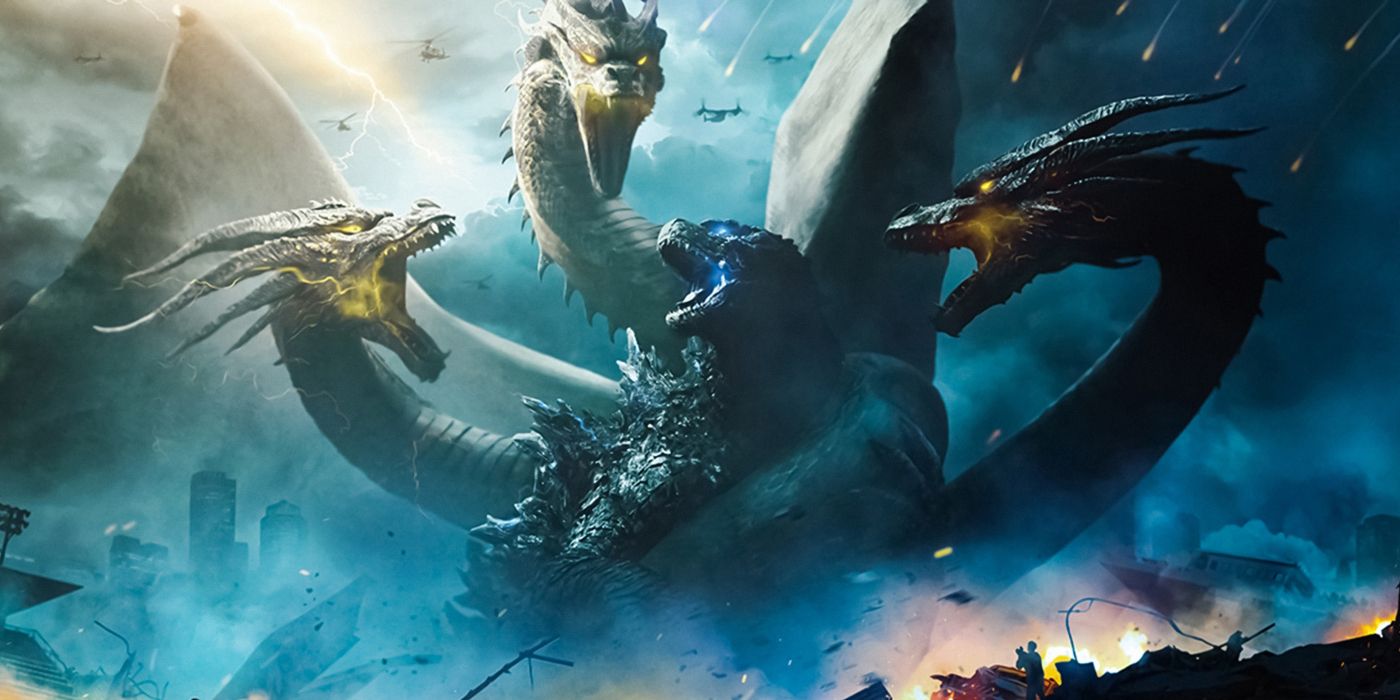
Taking place 5 years afterward the events of 2014's Godzilla, Godzilla: King of the Monsters is essentially a reboot of Ghidorah, the Three-Headed Monster, pitting Godzilla and Mothra confronting Rodan and perpetual shitheel King Ghidorah. It's a direct sequel to Godzilla and contains references to the prequel film Kong: Skull Island.
Godzilla vs. Kong (2021)
Our gorgeous bois fight for the 2d time since 1962's Male monarch Kong vs. Godzilla. Two years subsequently Godzilla: King of the Monsters, the titularly royal lizard begins attacking humans for no apparent reason. Kong is brought in as a ringer to try and thwart the aroused kaiju, who may or may not be under the control of shadowy forces.
Godzilla Movies in Lodge of Release
Luckily, if you want to spotter every Godzilla flick in the guild in which they were released, it's pretty much exactly the aforementioned as the chronological gild with a few notable differences. We've listed each movie below, with the exception of the localized releases. Just… don't watch those, human being.
Godzilla – 1954
Godzilla Raids Again – 1955
King Kong vs. Godzilla – 1962
Mothra vs. Godzilla – 1964
Ghidorah, the Iii-Headed Monster – 1964
Invasion of Astro-Monster – 1965
Ebirah, Horror of the Deep – 1966
Son of Godzilla – 1967
Destroy All Monsters – 1968
All Monsters Set on – 1969
Godzilla vs. Hedorah – 1971
Godzilla vs. Gigan – 1972
Godzilla vs. Megalon – 1973
Godzilla vs. Mechagodzilla – 1974
Terror of Mechagodzilla – 1975
The Return of Godzilla – 1984
Godzilla vs. Biollante – 1989
Godzilla vs. King Ghidorah – 1991
Godzilla vs. Mothra – 1992
Godzilla vs. Mechagodzilla Two – 1993
Godzilla vs. SpaceGodzilla – 1994
Godzilla vs. Destoroyah – 1995
Godzilla - 1998
Godzilla 2000: Millennium – 1999
Godzilla vs. Megaguirus – 2000
Godzilla, Mothra and King Ghidorah: Giant Monsters All-Out Attack – 2001
Godzilla Against Mechagodzilla – 2002
Godzilla: Tokyo Southward.O.S. – 2003
Godzilla: Last Wars – 2004
Godzilla – 2014
Shin Godzilla – 2016
Godzilla: Planet of the Monsters – 2017
Godzilla: City on the Edge of Boxing – 2018
Godzilla: The Planet Eater – 2018
Godzilla: King of the Monsters – 2019
Godzilla vs. Kong – 2021
Almost The Writer

Source: https://collider.com/how-to-watch-godzilla-movies-in-order/

Publicar un comentario for "King Kong Vs Godzilla Picks Up Where Godzilla Raids Again Left Off Ice Berg"